


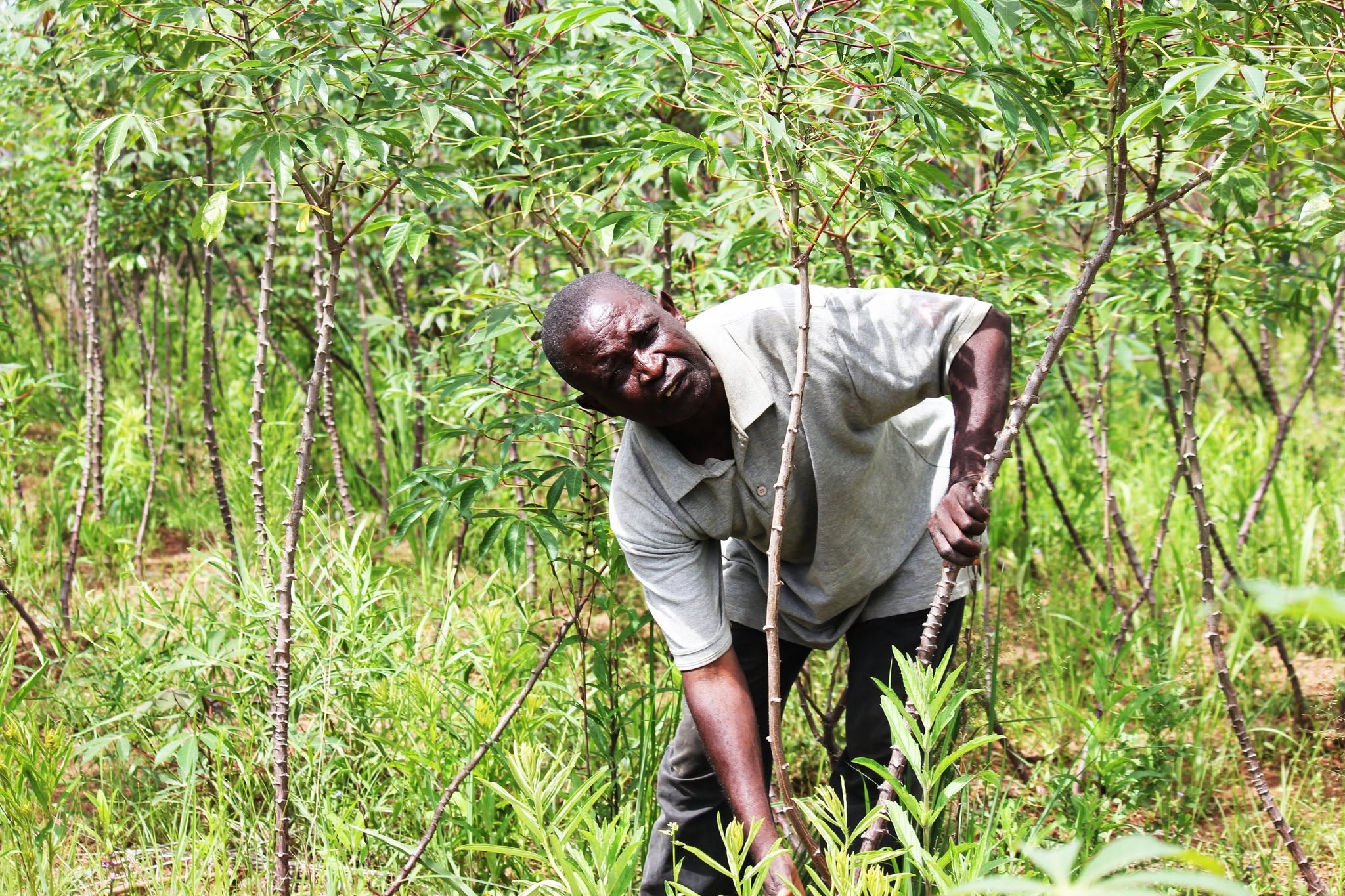
 Since 2015, Musika has been a key player in the Cassava value chain, a sector previously characterised by informal trade and low farm gate prices to the disadvantage of smallholder farmers who are the main producers of the crop.
Musika has since invested over US$1 million dollars towards the commercialisation of the cassava sector through multiple interventions implemented by 10 private sector partners in Northern, Luapula, Western and North Western Provinces of Zambia.
Its partners are drawn from a diverse range of industry operators including brewery, food processors and confectionary, livestock feed, biofuels and ethanol producers. These have played a pivotal role in meeting Musika’s main objective of providing a ready and transparent market for the cassava crop, and access to inputs such as improved cassava varieties by smallholder farmers, coupled with training and extension services, to help meet the quality and quantity that the market requires.
Additionally, Musika’s investment extends to aggregators, mostly rural based Small and Medium Enterprises (SMEs), that provide haulage services to aggregation centres, and mechanised service providers through whom farmers can access tractor tillage services for land preparation to increase production and productivity.
Musika believes that the combination of the above services provides farmers with not only opportunities to market their produce, but also the knowledge and confidence to maximise the benefits of these market opportunities, invest in their own production, and use the markets to graduate out of poverty. To date, over 25,000 (40% of whom are female) smallholder farmers have benefitted from the improved cassava market.
As a non-profit organisation that stimulates and supports private sector investment in the smallholder market, Musika’s strategies include giving support to businesses that buy and process agricultural commodities to establish long term commercial relationships with smallholders, in which there is some form of ‘value addition’ to the transaction. This ‘value’ can be in the form of embedded extension support to farmers, access to finance, technology transfer, forward pricing, assured off-take, supply contracts and other market services.
Therefore, Musika support comes in form of technical and early stage financial support in the form of logistics (motor vehicles and motorbikes for company extension staff) and infrastructural assets (digital scales, software for digital payment platforms, components of processing equipment), training and extension costs etc. to mitigate the risk of developing, testing and taking to scale business models that constructively engage large numbers of farmers, especially women.
The development of the cassava market also present multiple benefits for farmers in the light of climate change, and an additional business opportunity for some of Musika’s partners involved in the production of ethanol arising from the high demand for hand sanitizers following the current COVID-19 epidemic.
In terms of climate change mitigation, Musika is working to improve the range of crop production options for farmers towards a more diverse range that is supported simultaneously by a retail industry that provides relevant inputs, an assured market and other associated services around the production of more drought tolerant legumes and cereals, including cassava.
With the advent of the COVID-19 challenge that has pushed the demand for a bi-product of ethanol (hand sanitizer), Musika’s partners are expected to increase demand for the cassava crop from farmers, who are already experiencing over production stimulated by new market opportunities that are facing challenges to absorb all the crop.
One of Musika’s partner has a target of 12,000 smallholder farmers (of which 50% are women) set to benefit from its $9 million ethanol and livestock feed processing plant which requires a daily supply of 150 tonnes of cassava feedstock.
The company invested an additional $10 million to develop its farmer supply network and cassava production in order to meet its annual target of 50,000 tonnes of dry cassava chips. This will translate into 15 million litres of finished ethanol worth $18 million per year, to be used primarily for blending with petrol and in pharmaceuticals, food and other related industries, and also for export.


